


Two and a half years into motherhood, I find myself—rather unexpectedly—beginning to rediscover who I am. For so long, every ounce of my energy went into caring for Luca, my son. In those early months (let’s be honest, in that first year especially), all other parts of myself seemed to vanish. The pieces of my identity—the roles, interests, and quirks I once knew so intimately—all faded as I poured everything into the act of caregiving.
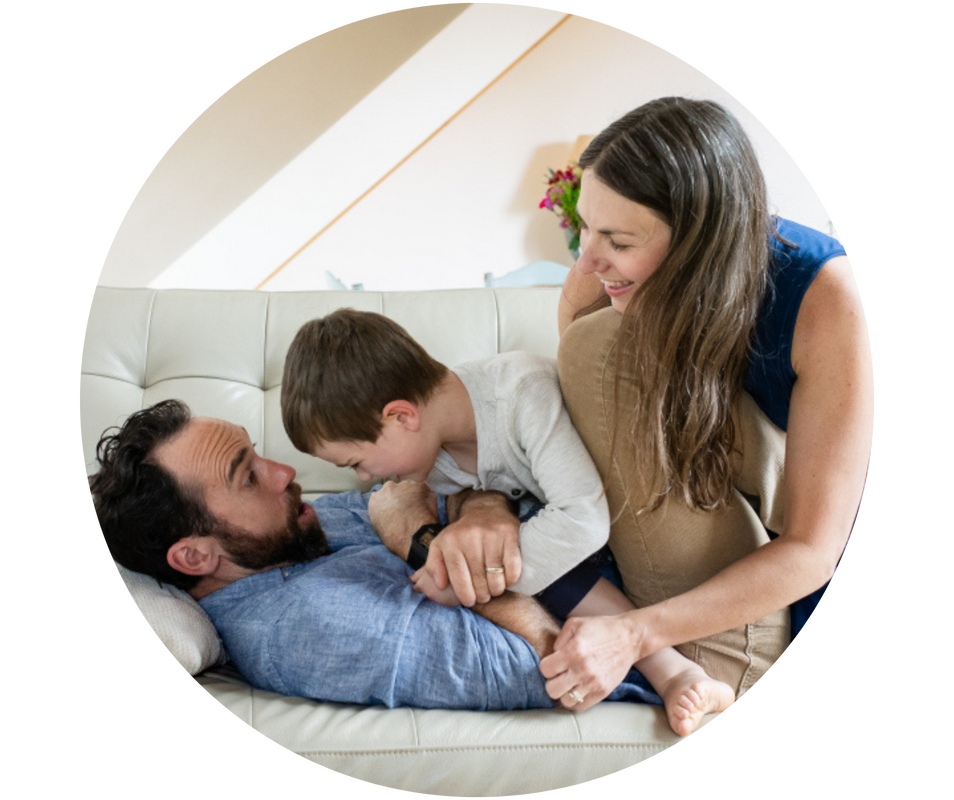 | I grieved that loss. But I didn’t have the language for it. The anxiety, the ache—I just called it “new mom jitters.” No one had told me this would happen, and our culture rarely talks about it. There’s so much focus on the baby—on their needs, milestones, and how we’ll keep them alive and thriving. But who talks about the identity fracture that happens for us in this transformation, especially for mothers? Only now, as parts of me begin to re-emerge, do I realize I’ve been living through something with its own name: matrescence. |
The evolution of identity through motherhood. Each piece of myself that returns is changed—sometimes softer, sometimes stronger. It’s as if the puzzle of who I am is being reshaped, piece by piece, into an entirely new picture. I am profoundly different from who I was just two and half years ago. And I am learning to celebrate that.
The Practice of Relational Life—With Myself, With My Child
In my journey, I’m discovering how tied this evolution is to the relational life work that I do. Through RLT, we learn that authentic connection starts with letting ourselves be seen—by ourselves as much as by others. I’m finally relating to myself with empathy, patience, and curiosity. Each piece of identity returning—work, partnership, creativity—brings its own questions: “Do I still love this? How does this fit the mother I am now?”
What surprises me is how much the work of conscious parenting is really about mutual respect; it’s about relating to our children as full, spiritual beings from the very beginning. I’ve tried to practice this with Luca: to honor his perceptions and whole-personhood, even in tiny, preverbal moments. And as I do this, I realize I am also honoring my own personhood anew.
Identity Shift, and the Grief and Growth That Comes With It
So often there’s silence around the grief that comes with this transition. In RLT, we talk about the importance of naming what is true. I had to learn to name my grief, my anxiety, and my confusion—rather than brushing it off or hiding behind perfectionism. It’s this honesty with ourselves that opens the door to compassion, connection, and growth.
The same goes for the harder moments in parenting—like facing my urge to control. I learned control young, from my own parents, and now, I see those patterns show up with Luca. It’s humbling (and, honestly, sometimes painful) to realize how much I want to shape, direct, and sometimes manage both our lives. But in admitting this to myself, I’m actually modeling the heart of what I want to teach him: that we can unlearn, we can repair, and we can grow. I am learning to let go. Slowly, imperfectly, with love.
Finding My Voice & My People
Alongside motherhood, I’ve been finding my voice in the world—in my work, as a leader, as an advocate. Sometimes this work is deeply uncomfortable, especially around issues of inclusion and diversity where I worry about saying the wrong thing, or not speaking up enough. But I’m learning that growth lies in the discomfort. Just as in parenting, imperfect efforts matter more than not showing up at all.
The world outside sometimes feels as fractured as my identity did: divided by politics, fear, and the pressure to pick a side. But I believe, at our core, we share more than we realize. Relational work isn’t just about our families, it’s about building bridges—celebrating our differences as gifts, and choosing connection over conflict whenever possible.
The Compass And The Lake
| Sitting by the lake, holding the little compass my mother gave me years ago, I’m struck by the metaphor. Motherhood gives us a new map, but not always a clear direction. We must learn to orient ourselves, again and again, facing this evolving life with curiosity and openness. There is, I realize, a new level of rootedness—a confidence that I am, and will always be, a work in progress.I still falter. I still worry. The stakes feel higher now that I am a mother, and each new phase brings its own uncharted territory: preschool transitions, family routines, travel adventures, and toddler mischief. |  |
But I find more joy now—more true delight at being with my family. There is still noise and mess and tantrums, but also an astonishing, simple beauty.
Motherhood is not a destination, but an ongoing journey—a constant becoming. And if there’s one thing I’m learning through both matrescence and relational life therapy, it’s that the willingness to be honest, to relate deeply, and to keep growing is more important than any previous plan of who I was “supposed” to be.
For every mother, and every person, rediscovering who you are—again and again—is a gift worth celebrating. Let’s keep naming the hard parts as well as the joys, and keep finding each other along the way.
photo credit: Lynn Townsend (@lynntownsendphotographer on ig)
If you enjoyed this reflection, I invite you to listen to the companion podcast episode on “Motherhood: An Evolutionary Gateway,” where we explore these ideas in real-time. Let’s keep the conversation going, and honor the ongoing journey of becoming.